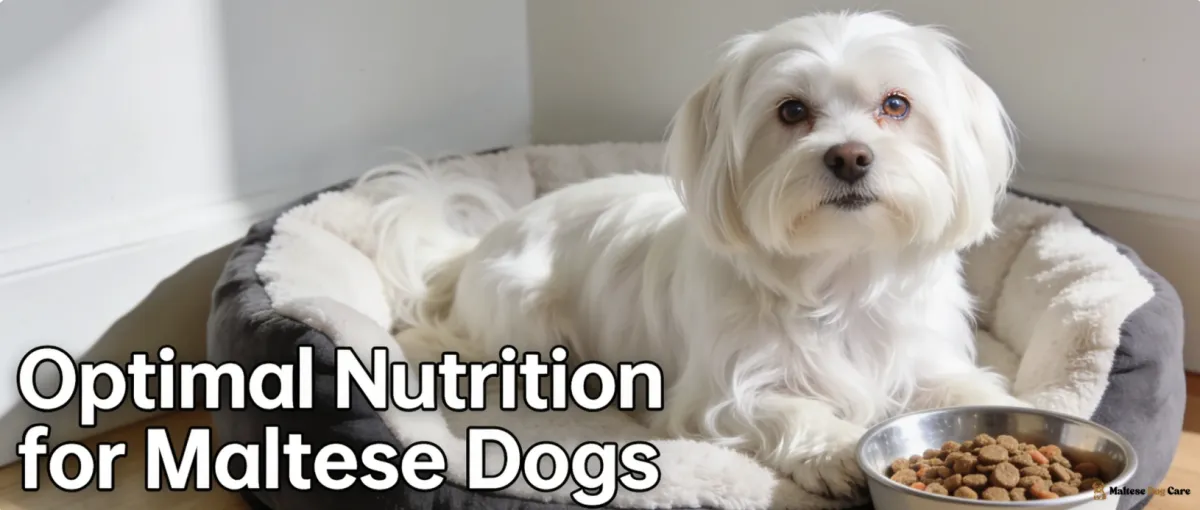
Maltese Dog Nutrition Guide: Essential Diet Tips | Maltese Dog Care
By Maltese Dog Care Editorial Team · Updated 2026-07-15
Maltese dogs thrive on high-quality protein sources like chicken or salmon as the primary ingredient. Small-breed formulas from brands like Royal Canin Maltese Adult provide tailored nutrition. Meals split into 3 portions daily prevent hypoglycemia, a common risk in this tiny breed.
Maltese dogs, most of whom weigh under seven pounds as adults, require carefully portioned, small-breed-specific food that supports their fast metabolism, delicate digestive systems, and long, silky coats. A balanced diet with high-quality protein. Appropriate fat levels remains essential for maintaining their signature gleaming white coat and overall vitality.
Maltese dogs typically weigh under seven pounds as adults, and their fast metabolism, sensitive digestion. Long silky coats all shape what food best supports their health. Maltesedogcare.com guides owners toward balanced, portion-controlled meals formulated for small breeds, addressing coat quality, digestive comfort. Energy needs in one structured approach.
Below are our recommended foods for Maltese puppies and adults. Each option has been selected for its quality ingredients, small-breed formulation, and suitability for the unique nutritional needs of Maltese dogs.
🥇 Recommended Foods for Maltese Dogs
🐶 Best Puppy Dry Food
ROYAL CANIN Size Health Nutrition X-Small Puppy Dry Dog Food
Designed for puppies up to 10 months old, this small-breed formula provides highly digestible protein, supports healthy growth, and includes kibble sized for tiny mouths.
🥣 Best Puppy Wet Food
ROYAL CANIN Size Health Nutrition X-Small Puppy Thin Slices in Gravy
A soft, highly palatable wet food formulated for X-Small puppies. Ideal for fussy eaters or owners who prefer mixed feeding.
⭐ Best Overall Food for Adult Maltese
ROYAL CANIN Breed Health Nutrition Maltese Adult Dry Dog
Created specifically for Maltese dogs over 10 months old. Supports a healthy white coat, promotes digestive health, and features kibble designed for the breed's small jaw.
💰 Best Budget Adult Dry Food
ROYAL CANIN Size Health Nutrition X-Small Adult Dry Dog Food
An excellent choice for small adult dogs needing balanced everyday nutrition, digestive support, and healthy energy levels at a more affordable price than breed-specific formulas.
Key Takeaways
Maltese dogs require balanced nutrition in portion-controlled meals due to their fast metabolism and small size.
Grain-free dog food raised health concerns, prompting veterinarians to reconsider previous recommendations for grain-free diets.
Not all dog foods provide equal nutrition, taste, and health benefits for Maltese dogs.
Maltese coat health and digestive system function depend directly on proper food selection and nutrition.
What Makes Maltese Nutrition Uniquely Different?
Maltese dogs have a combination of physical traits — fast metabolism, a delicate digestive system. A long, continuously growing coat — that make generic small-dog food an inadequate match. A Maltese Dog Nutrition Guide built around these breed-specific factors produces noticeably better outcomes than one-size-fits-all feeding plans.
Most adult Maltese weigh under seven pounds. That compact body means limited stomach capacity, so every meal must deliver concentrated, balanced nutrition without overwhelming portion sizes. Skipping breed-specific formulations risks either underfeeding essential nutrients or overloading a sensitive gut.
Why Does Coat Health Depend on What a Maltese Eats?
The Maltese coat grows continuously, unlike the coats of many other breeds. High-quality nutrition directly supports that ongoing growth cycle. Owners who cut corners on diet often notice dullness and breakage before any other health signal appears.
How Does a Fast Metabolism Affect Maltese Feeding Needs?
A fast metabolism means Maltese dogs burn through energy quickly. Their digestive systems are also more sensitive than those of larger breeds. These two factors together demand food that is both easily digestible and nutrient-dense.
Key traits that shape Maltese nutritional requirements:
Fast metabolism requiring consistent, energy-dense meals
Delicate digestive system sensitive to low-quality ingredients
Continuously growing coat dependent on high-quality dietary nutrition
Sub-seven-pound body weight limiting meal volume per sitting

How Should You Feed a Maltese Puppy vs. Adult?
Feeding a Maltese puppy differs meaningfully from feeding an adult dog. A Maltese Dog Nutrition Guide built around life stage is the most reliable foundation for long-term health. A puppy's nutritional needs directly shape both immediate development and future wellbeing.
Life stage is one of the first factors Maltese owners should weigh when selecting a food. Puppies require formulas that support rapid growth, while adults need balanced maintenance nutrition suited to a small, compact body.

Why Does Life Stage Matter So Much for Maltese Dogs?
A Maltese puppy's nutrition is pivotal to immediate development and long-term health outcomes. Choosing a food labeled for the correct life stage ensures the nutrient profile matches what the dog's body actually needs at that point in life.
Can Feeding Extras Cause Problems for Maltese Dogs?
Offering a Maltese frequent table scraps or tasty extras encourages increasingly picky eating habits over time. Beyond fussiness, those extras contribute to unwanted weight gain — a real concern for a breed this small.
Keeping meals consistent and life-stage appropriate protects both the Maltese's waistline and the owner's peace of mind at mealtimes.
Should You Choose Grain or Grain-Free Food?
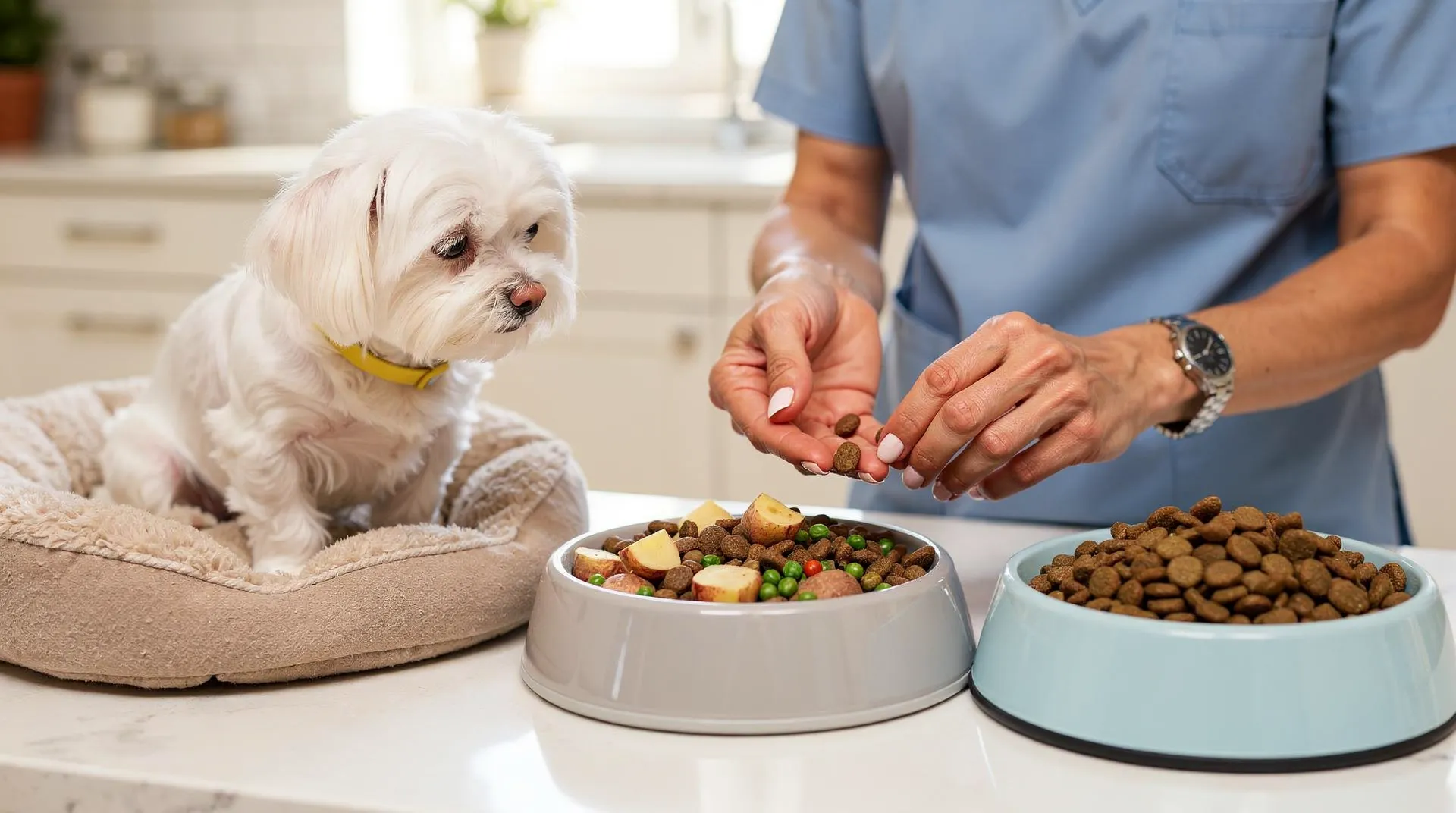
For most Maltese owners, neither grain nor grain-free food is automatically the right answer. The decision requires weighing emerging veterinary concerns against each dog's individual digestive needs. And a Maltese Dog Nutrition Guide helps owners work through exactly that.
Why did grain-free diets fall out of favor?
Grain-free diets were once widely recommended because heavy grains were believed to trigger intolerance and allergies in dogs. Veterinary opinion shifted when cases of dilated cardiomyopathy (DCM) — a serious heart condition. Were reported in dogs eating grain-free formulas high in peas, lentils, other legume seeds, or potatoes. Those findings caused both veterinarians and owners to reconsider grain-free feeding as a default choice.
What should Maltese owners look for instead?
Owners benefit from evaluating ingredient quality rather than defaulting to a grain-free label. Key considerations include:
Protein source — named meat as the first ingredient
Legume content — limit formulas heavily reliant on peas or lentils
Digestibility — small-breed formulas sized for a Maltese's limited stomach capacity
Maltese Dog Care covers nutrition and feeding as a core part of its breed-specific guidance, giving owners a structured starting point before consulting a veterinarian. The goal is informed decision-making, not guesswork.
Feeding your Maltese with intention transforms their daily health and long-term wellbeing. By understanding their small-breed metabolism, choosing appropriate portions. Selecting nutrient-dense foods suited to their sensitive systems, you build a foundation for vitality and comfort. Consistent, thoughtful nutrition paired with regular veterinary guidance creates the calm, sustainable routine your Maltese deserves—one meal at a time.
FAQ
Why do Maltese dogs need breed-specific food instead of generic small-dog formulas?
Their fast metabolism, delicate digestive system. Continuously growing coat create nutritional demands that generic formulas fail to meet, risking either nutrient deficiencies or digestive overload.
How does diet affect a Maltese dog's coat?
The Maltese coat grows continuously, and high-quality nutrition directly supports that ongoing growth cycle. Owners who cut corners on diet notice dullness and breakage before any other health signal appears.
How does feeding a Maltese puppy differ from feeding an adult Maltese?
Puppies require formulas that support rapid growth. Adults need balanced maintenance nutrition suited to their small, compact body under seven pounds.
