
Prevent Maltese Dog Boredom: Indoor Enrichment Toys & Tips | Maltese Dog Care
Pets, Maltese Dogs, Dog Behaviour, Indoor Enrichment
Bored Maltese? How to Spot the Signs and Boost Indoor Enrichment
Maltese dogs are bright, affectionate companions who love being close to their people. But their gentle nature and small size can sometimes fool owners into thinking they don’t need much mental or physical activity. When a Maltese doesn’t get enough stimulation, boredom can quickly set in—and it often shows up as barking, pacing, chewing, clinginess, or restless behaviour. This Maltese Dog Care guide will help you recognise the common signs of boredom in Maltese dogs and give you practical, indoor-friendly ideas to keep your little companion happy, calm, and engaged.
Keep Your Maltese Happy Indoors
Spot boredom early and turn downtime into enrichment time
Why Maltese Dogs Get Bored Indoors
The Maltese is a companion breed, originally bred to spend time with people rather than herd animals or guard property. That means they often want to be right by your side, watching what you do and joining in where they can. While this makes them loving family members, it also means they rely heavily on us for mental stimulation, interactive toys and chewy toys.
Many Maltese live in apartments or smaller homes, which can limit outdoor time. On busy days, it’s easy to shorten walks, skip play sessions, or rely on quick toilet breaks. Over time, this lack of variety and engagement can leave your dog feeling under-stimulated and frustrated, even if their basic needs like food and water are met. Boredom is more than just “having nothing to do”—for dogs, it can affect mood, behaviour, and overall wellbeing.
Common Signs of Boredom in Maltese Dogs
1. Excessive Barking or Whining
Maltese dogs naturally have a voice—many of them like to alert you to sounds in the hallway or visitors at the door. But when barking becomes constant or seems to have no clear trigger, boredom is often part of the picture. A bored Maltese might bark at every tiny noise, bark for attention when you sit down, or whine and vocalise when there’s nothing obvious going on. This is their way of saying, “I need something to do” or “Please interact with me.”
2. Pacing and Restless Movement
If your Maltese seems unable to settle—walking back and forth across the room, circling the coffee table, or repeatedly trotting from one window to another—this can be a sign of mental restlessness. Pacing often shows up in the evenings when the day has been quiet and your dog still has unused energy. It can also appear when they’re waiting for something interesting to happen, like a walk, playtime, or your attention after work.
3. Destructive Chewing and Nibbling
Chewing is a natural behaviour for dogs, but when your Maltese starts targeting furniture, shoes, pillows, or table legs, boredom may be driving the behaviour. Without appropriate outlets, they look for their own “projects”—which often means turning household items into chew toys. This can be especially common in younger Maltese or those left alone for long periods with nothing interesting to do. Destructive chewing can also overlap with anxiety, so it’s important to look at the full picture of your dog’s behaviour.
4. Clinginess and Constant Demands for Attention
Many Maltese are naturally affectionate and enjoy being close. But if your dog cannot entertain themselves at all and constantly paws at you, jumps on your lap, nudges your hand, or cries when you stop interacting, boredom may be part of the issue. When a dog lacks independent activities, they may rely on you as their only source of entertainment. This can lead to clingy behaviour that feels sweet at first but can become exhausting and stressful for both of you over time.
5. General Restlessness and Trouble Settling
A content Maltese will happily curl up for naps between activities. A bored one may seem “on edge” all day—getting up frequently, changing resting spots, scratching at doors, or reacting to every small movement. They might lie down, then pop back up a minute later as if they’re thinking, “Now what?” Restlessness can also show up as zoomies in the evening, where your dog suddenly races around the home because they haven’t had enough outlets during the day.
6. Other Subtle Signs to Watch For
Digging at blankets or carpets as a way to release pent-up energy.
Stealing objects like socks or tissues to start a chase game with you.
Over-grooming (licking paws or fur excessively) when they have no other focus.
💡 Gentle reminder: Some of these signs can also be linked to anxiety or medical issues. If behaviour changes suddenly or seems extreme, speak with your vet to rule out pain or illness.
Choosing the Right Toys to Beat Maltese Boredom
Toys are more than just cute accessories—they’re essential tools for mental stimulation, especially for indoor-focused breeds like the Maltese. The best toy collection offers a mix of textures, challenges, and ways to play, so your dog doesn’t get bored with the same thing every day.
Soft Toys for Comfort and Light Play
Many Maltese adore soft plush toys they can carry, cuddle, and shake. Look for:
Small toys, lightweight plushies that fit comfortably in their mouth.
Toys with squeakers or crinkly sounds to keep interest high.
“Hide and seek” plush toys where smaller pieces tuck into a larger toy (like tiny animals in a soft “den”).
Always supervise if your Maltese likes to rip toys open. Replace damaged toys so they don’t swallow stuffing or small parts.
Chew Toys for Safe, Satisfying Gnawing
To redirect destructive chewing, offer a few safe chew toys designed for small dogs. Options include:
Soft rubber bones or rings that are gentle on small jaws.
Nylon chews made specifically for toy breeds (avoid overly hard chews that might damage teeth).
Edible dental chews approved by your vet, used in moderation.
💡 Pro Tip: Keep a small “chew basket” in your living room. When your Maltese starts nibbling furniture, calmly redirect them to an appropriate chew from the basket and praise them for using it.
Food-Dispensing and Puzzle Toys for Mental Workouts
One of the best ways to reduce indoor boredom is to make your Maltese “work” for some of their food. Food-dispensing toys and puzzle feeders encourage them to sniff, paw, and think to earn their meals. For small dogs, choose:
Slow-feeder bowls with ridges or patterns that make eating more of a game.
Rolling treat balls that release kibble as they push them around.
Beginner puzzle boards with sliders, flaps, or small drawers sized for tiny noses and paws.
Start with easy puzzles so your Maltese doesn’t get frustrated. As they gain confidence, you can gradually introduce more challenging designs, always keeping sessions positive and fun.
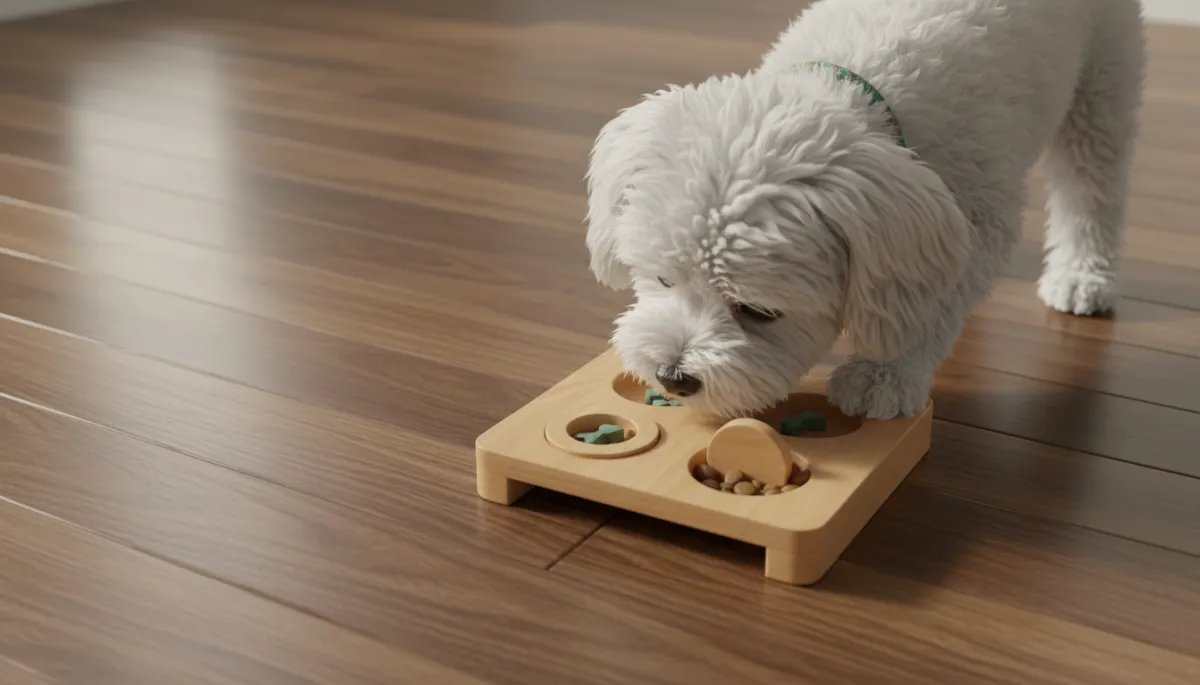
Simple puzzle feeders can turn everyday meals into brain-boosting activities.
Indoor Enrichment Activities Your Maltese Will Love
Sniffing Games and Nose Work
Even though Maltese are not scent hounds, they still love using their nose. Sniffing is incredibly calming and mentally tiring for dogs. Try these simple nose work games:
Treat scatter: Sprinkle a handful of kibble or small treats over a rug or safe area and let your Maltese sniff them out.
Find it cups: Place a treat under one of three cups, shuffle them slowly, and encourage your dog to choose the right one.
Snuffle mat: Use a snuffle mat or a rolled-up towel with treats hidden inside for a longer sniffing session.
These activities are gentle on joints and ideal for rainy days, older Maltese dogs, or companion dogs with limited outdoor exercise. For more enrichment ideas and the best small toys for Maltese dogs, visit Maltese Dog Care.
Simple Indoor Obstacle Courses
You don’t need a large house to set up a fun obstacle course. Use everyday items to create a mini adventure:
Cushions to step over or walk around.
A low, stable box or folded blanket to hop on and off (if your vet says jumping is safe).
A tunnel made from chairs and a draped blanket, if your Maltese is confident and curious.
Guide your dog through the course with treats and praise. Keep it low-impact, especially because Maltese are small and can be prone to joint issues. The goal is fun, not speed.
Training Sessions as Enrichment
Teaching your Maltese new skills is one of the most effective ways to fight boredom. Short, positive training sessions exercise the brain and strengthen your bond. Try:
Reinforcing basics like sit, down, stay, and come.
Fun tricks such as spin, paw, roll over, or peek-a-boo.
Practical skills like going to a mat, which also helps with calm behaviour.
Aim for 5–10 minute sessions, one to three times a day, using tiny treats and lots of praise. Keeping sessions short prevents frustration and keeps learning fun.
Interactive Play Ideas for You and Your Maltese
Gentle Indoor Fetch and Tug
Even in small spaces, you can enjoy active games together. Use soft toys to play short-distance fetch down a hallway or across a room. For tug, choose a lightweight rope or plush toy and keep the game gentle—no rough shaking or high jumps. Always let your Maltese “win” sometimes; it builds confidence and keeps the game positive.
Hide-and-Seek with You or Toys
Hide-and-seek is a wonderful way to combine mental and physical exercise. You can:
Ask your Maltese to stay (or have someone gently hold them), then hide in another room and call them. Celebrate when they find you.
Hide a favourite toy or treat and encourage them to “find it,” starting with easy spots and making it slightly harder over time.
This game taps into their natural curiosity and gives them a clear, fun mission to focus on.
Interactive Toys You Control
Some toys are designed to be used together with you, such as flirt poles (a toy on a string attached to a stick) or remote-controlled rolling toys and puppy toys. For a Maltese, choose lightweight, slow-moving options and keep sessions short. These toys can be especially helpful for short bursts of energy release on days when walks are limited.
💡 Balance tip: Interactive play is wonderful, but your Maltese also needs to learn how to relax and enjoy independent activities. Mix joint play with solo enrichment like chew toys and puzzle feeders.
Building Healthy Routines to Reduce Indoor Boredom
Create a Predictable Daily Rhythm
Dogs feel more secure when they have a general idea of what happens each day. While life doesn’t need to be rigid, a loose schedule helps reduce restlessness and anxiety. Try to keep these activities at roughly similar times:
Morning toilet break, short walk, and a food puzzle for breakfast.
Midday sniffing game or chew session (if someone is home or a dog sitter can visit).
Evening walk, training or play, followed by calm cuddle time.
When your Maltese knows that fun and interaction are coming, they’re less likely to become clingy or frantic for attention at random times.
Rotate Toys and Activities to Keep Things Fresh
Just like people, dogs can get bored of the same toys if they’re always available. Instead of leaving everything out, keep a small selection accessible and store the rest. Every few days:
Swap a couple of toys from the basket with ones in storage.
Introduce a different puzzle feeder or change how you use it (kibble one day, soft treats the next).
Rotating toys makes old favourites feel new again and helps your Maltese stay curious and engaged without you constantly buying more items.
Support Rest and Calm, Not Just Activity
While we often focus on tiring our dogs out, over-stimulation can also cause restlessness and barking. A healthy routine balances activity and rest. Make sure your Maltese has:
A cosy, quiet bed or crate where they can retreat undisturbed.
Calm periods after meals and walks to digest and relax.
Soft background noise (like gentle music) if outside sounds trigger barking.
Teaching cues like “settle” or “on your bed” can also help your dog understand when it’s time to relax, which reduces overall stress and boredom-driven behaviours.
FAQs: Boredom and Indoor Enrichment for Maltese Dogs
How do I know if my Maltese is bored or anxious?
Bored dogs often show behaviours like barking, pacing, or chewing, but they usually improve when you offer activities, play, or training. Anxiety, especially separation anxiety, tends to appear when you’re leaving or gone and may involve trembling, drooling, or trying to escape. If your Maltese seems distressed rather than just restless, or if the behaviour appears suddenly, it’s wise to consult a vet or qualified behaviour professional to rule out anxiety or health problems.
How much indoor stimulation does a Maltese need each day?
Every dog is different, but many adult Maltese do well with:
1–2 short walks or outdoor sniffing sessions (if possible).
20–40 minutes of combined training, play, and enrichment spread throughout the day.
Access to safe chews or puzzle toys for independent down-time.
Puppies and younger dogs may need more frequent, shorter sessions, while seniors might enjoy gentler but still mentally engaging activities.
My Maltese barks at every sound. Can enrichment really help?
Yes, in many cases. While some barking is natural, a bored dog with excess energy is more likely to react to every noise. By using puzzle feeders, sniffing games, and regular training, you help your Maltese feel more satisfied and less on edge. Teaching cues like “quiet” or “look at me,” combined with rewarding calm behaviour, can also reduce barking over time. If the barking is intense or seems fear-based, consider guidance from a trainer who uses kind, reward-based methods.
What if I work long hours and my Maltese is alone a lot?
When you’re away for many hours, planning ahead is key. You can:
Use a puzzle feeder or snuffle mat for part of their breakfast before you leave.
Arrange a midday visit from a trusted friend, neighbour, or dog walker for a toilet break and short play session.
Leave a safe chew or two and rotate toys regularly so they don’t feel stale.
When you come home, focus on quality time: a walk, some training, and relaxed cuddles help your Maltese feel secure and fulfilled.
Can a bored Maltese become destructive even if they’re small?
Absolutely. Size doesn’t prevent chewing, scratching, or digging. A bored Maltese may damage furniture, shoes, or doors, and they can even hurt themselves by chewing unsafe objects. Providing chew toys, supervising when possible, and using baby gates or pens to limit access to tempting items can significantly reduce problems. Most importantly, channel that energy into appropriate outlets through toys, enrichment, and routine.
Conclusion: A Happier, Calmer Maltese Starts with Enrichment
Barking, pacing, destructive chewing, clinginess, and restlessness are all common signs that a Maltese might be bored and under-stimulated indoors. Rather than seeing these behaviours as your dog being “naughty,” it helps to view them as messages: your companion is telling you they need more to do, more to think about, and more appropriate ways to use their energy.
By choosing suitable toys, introducing food puzzles and sniffing games, adding short training sessions, and building a gentle daily routine, you can transform your Maltese’s day-to-day life. Even in a small apartment or on rainy weeks, your dog can enjoy a rich, interesting indoor world full of variety and positive experiences. Over time, you’re likely to see less barking, fewer destructive habits, and a more relaxed, content little companion who is happy to both play and rest by your side.
Most importantly, enrichment is not about perfection or buying every new gadget. It’s about small, thoughtful choices you make each day—offering a puzzle instead of a plain bowl, turning five spare minutes into a training game, or scattering kibble for a sniffing session. Those simple moments add up, deepening your bond and giving your Maltese the mentally stimulating, loving life they deserve, right inside your home.
