
Maltese Grooming Routine: A Complete Guide for Owners | Maltese Dog Care
Grooming Maltese Dogs
How Often Should a Maltese Be Groomed? A Complete Schedule and Routine Guide
If you share your life with a Maltese, you already know that their long, silky white coat is one of the breed’s most charming features—and one of the most demanding. Understanding exactly how often a Maltese should be groomed, bathed, brushed, and trimmed is essential for keeping them healthy, comfortable, and looking their best. This guide by Maltese Dog Care walks you through a realistic Maltese grooming schedule, from daily coat care to monthly maintenance, so you can build a stress-free routine that works for both of you.
Why Grooming Maltese Dogs Is So Important
Grooming Maltese dogs is not just about appearance. Their fine, single-layer coat behaves more like human hair than typical dog fur. It does not shed heavily, which is good for people who dislike loose hair, but it means tangles and mats can form quickly if you do not keep up a consistent maltese grooming routine. Mats are more than a cosmetic issue; they can pull on the skin, trap dirt and moisture, and even hide infections or parasites.
Regular grooming also helps you spot changes in your dog’s health early. While brushing and bathing, you naturally check for lumps, skin irritation, ear problems, or sore spots. For a small breed like the Maltese, early detection of these issues can make treatment easier and less stressful. In short, a thoughtful Maltese grooming schedule keeps your dog clean, comfortable, and healthier in the long run.
How Often Should a Maltese Be Groomed Overall?
When people ask, how often should a Maltese be groomed?, they usually want a simple answer. In reality, grooming is made up of several different tasks, each with its own ideal timing. However, for a typical pet Maltese with a moderate-length coat, plan on a full professional grooming session every 4 to 6 weeks. This usually includes a bath, blow-dry, brushing, trimming or clipping, nail care, ear cleaning, and often a sanitary trim around sensitive areas.
That 4–6 week professional visit is only part of a complete Maltese grooming routine. Between appointments, you will still need to brush at home, wipe eyes, and keep their coat tidy. Thinking of grooming as a regular habit, rather than an occasional chore, makes it easier to manage and much more comfortable for your dog.
📌 Key Takeaway: Most pet Maltese do best with a professional groom every 4–6 weeks, supported by consistent at-home brushing and basic care.
Daily, Weekly, and Monthly Maltese Grooming Schedule
Creating a clear maltese grooming schedul helps you remember what needs to be done and when. Here is a practical breakdown of how often to groom a Maltese for each part of their care, from quick daily tasks to monthly check-ins.
Daily Grooming Tasks for Maltese Dogs
Quick brushing or comb-through: Aim for at least a light brush once a day, especially if your Maltese wears a longer coat. Using the best brush for Maltese dogs, focus on friction areas such as behind the ears, under the collar, and around the armpits where tangles tend to form the fastest.
Eye cleaning: Maltese are prone to tear stains. Gently wipe the area below the eyes daily with a damp, soft cloth or use a tear stain remover for Maltese dogs recommended by your vet to help prevent discoloration and skin irritation.
Paw and face check: After walks or play, quickly inspect paws for debris and the face for food caught in the beard or around the mouth as part of your daily care hygiene for Maltese dogs.
These daily steps take only a few minutes but dramatically reduce the risk of matting and keep your dog more comfortable between baths and full grooming sessions.
Weekly Grooming Tasks for Your Maltese
Thorough brushing: Once or twice a week, set aside extra time for a deeper brush-out. Use a pin brush or slicker brush followed by a metal comb to go through the coat in layers, making sure there are no hidden knots close to the skin.
Ear check: Gently look inside the ears for redness, a bad smell, or excessive wax. Clean only the outer ear with a cotton pad and a dog-safe ear cleaner if needed—never insert cotton swabs deep into the ear canal.
Teeth brushing: Dental care is part of overall grooming. Try to brush your Maltese’s teeth several times per week to reduce plaque and bad breath.
Monthly and Professional Grooming Tasks
Full grooming session: Every 4–6 weeks, schedule a professional groom or set aside time at home for a complete session: bath, blow-dry, coat trim or clip, nail trim, paw pad tidy, and sanitary trim around the rear and belly.
Nail trimming: Many Maltese need their nails shortened every 3–4 weeks. If you hear clicking on hard floors, it is time for a trim.
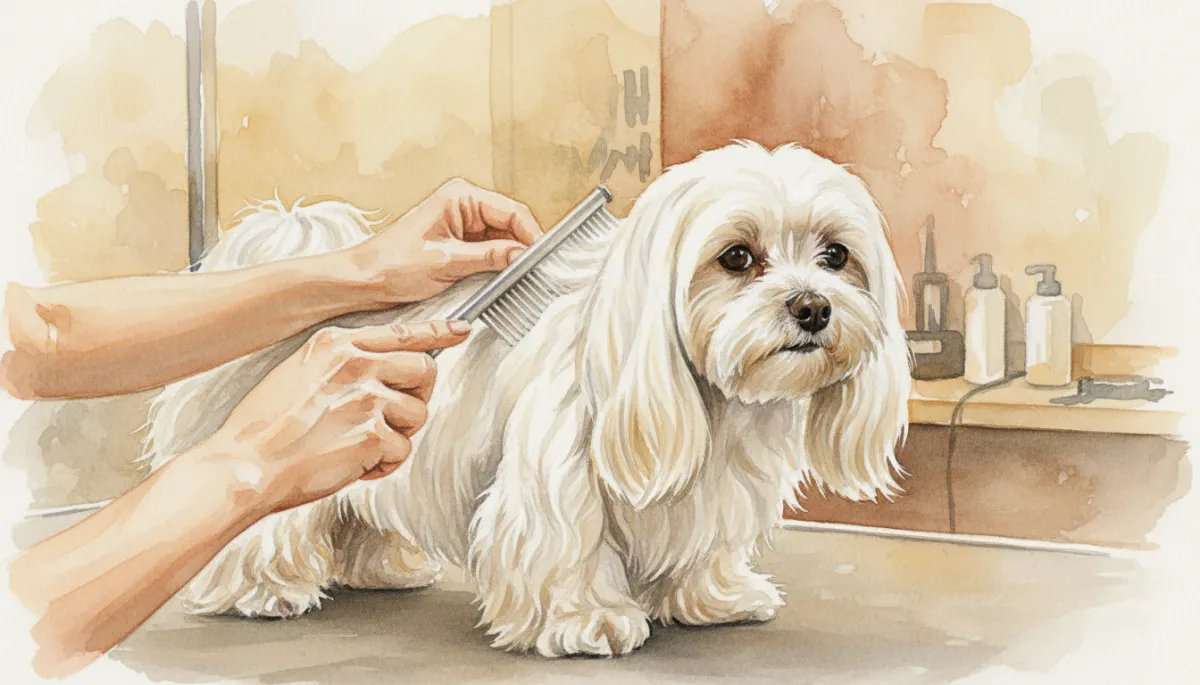
Regular brushing between baths keeps a Maltese coat smooth, clean, and free of painful mats.
How Often to Groom a Maltese at Home vs. the Groomer
Another way to think about how often to groom a Maltese is to divide the work between home care and professional sessions. For many owners, a balanced approach looks like this:
Home care: Daily light brushing, weekly deeper brushing, eye wiping, and regular teeth brushing.
Professional care: A full groom every 4–6 weeks that includes bathing, styling, nails, ears, and sanitary areas.
If you are comfortable bathing and trimming your dog yourself, you may be able to extend professional visits slightly, but even experienced owners often appreciate the precision and safety a trained groomer provides, especially for nails, delicate face trimming, and clipper work around sensitive skin.
💡 Pro Tip: Keep a simple checklist on your fridge or phone with daily, weekly, and monthly grooming tasks so everyone in the household knows what your Maltese needs and when.
How Often to Bathe a Maltese Without Drying the Skin
One of the most common questions owners ask is how often to bathe a Maltese. Because their coat is white and fine, dirt and discoloration can show quickly, tempting you to bathe them too often. In general, a bath every 3 to 4 weeks works well for most companion Maltese, especially if you brush frequently and keep them indoors most of the time.
If your Maltese loves rolling in the grass, playing at the park, or has allergies that cause skin issues, your vet or groomer may recommend bathing a bit more often with a gentle, moisturizing shampoo. On the other hand, very frequent baths with harsh products can strip natural oils and lead to dry, itchy skin. Observing how your dog’s skin and coat respond is key to finding the right rhythm for your individual pet.
How Often to Bathe a Maltese for Puppies vs. Adults
Puppies often get messier than adults, but their skin can be more sensitive. For young dogs, ask your vet how often to bathe a Maltese puppy based on their age and activity level. Typically, every 3–4 weeks is still a good target, with spot cleaning using a damp cloth or pet wipes in between. Always use products labeled safe for puppies and avoid getting shampoo in their eyes or ears.
Building a Stress-Free Maltese Grooming Routine
A successful maltese grooming routine is not only about timing; it is also about your dog’s emotional comfort. Many small dogs become anxious if grooming is rushed or only happens when they are already badly tangled. Instead, introduce grooming gradually, using short, positive sessions and lots of praise and treats.
Start with just a few minutes of gentle brushing each day, especially if your Maltese is new to grooming or has had a bad experience in the past.
Handle paws, ears, and the muzzle calmly so your dog learns that touch in these areas is safe and normal.
Reward calm behavior with small treats, soothing words, and breaks when they seem tired or restless.
Over time, your Maltese will begin to associate grooming with positive attention rather than stress, making each session easier and faster. This also helps your professional groomer work more safely and efficiently when your dog visits the salon.
Adjusting Your Maltese Grooming Schedule for Coat Length and Lifestyle
Not every Maltese has the same hairstyle or daily routine, so your exact maltese grooming schedul may need small adjustments. Here are a few common scenarios and how they affect how often to groom a Maltese.
Long Show Coat vs. Short “Puppy Cut”
Long coat: A flowing, floor-length coat demands daily, careful brushing and often professional grooming every 3–4 weeks to maintain its shape and prevent mats. Owners who choose this style must be committed to frequent grooming sessions.
Puppy cut or shorter trim: A short, even trim all over the body is easier to maintain. You may still brush daily, but tangles are less likely. Professional grooming every 4–6 weeks usually keeps this style neat.
Active Dogs vs. Mostly Indoor Companions
Very active Maltese: Dogs who spend a lot of time outdoors, at dog parks, or on trails may need more frequent baths and more thorough brushing to remove dirt, grass, and burrs from their coat.
Indoor Maltese: If your dog mostly lounges at home and takes short, clean walks, you may be able to stretch baths slightly, as long as you keep up with daily brushing and eye cleaning.
Signs You Should Groom Your Maltese More Often
Even with a well-planned Maltese grooming schedule, your dog’s coat and skin will tell you when adjustments are needed. Watch for these signs that your current routine might not be frequent enough:
You feel small knots or larger mats when you run your fingers through the coat, especially near the skin.
Your dog scratches or licks certain spots repeatedly, suggesting irritation or trapped debris.
Tear stains or discoloration around the eyes become more noticeable or smell unpleasant.
The coat looks dull, greasy, or dusty, even after brushing, indicating it may be time for a bath.
If you notice these issues regularly, increase the frequency of brushing, consider scheduling baths a bit closer together, or consult your groomer or veterinarian for guidance. Sometimes a change in products or technique can also make a big difference.
Putting It All Together: A Sample Maltese Grooming Schedule
To make this information easy to apply, here is an example of a simple, realistic weekly plan for a Maltese with a medium-length coat and a typical lifestyle:
Every day: 3–5 minutes of light brushing, eye wiping, and a quick check of paws and face.
Twice per week: More thorough brushing and combing through the entire coat, plus a brief ear and skin check.
2–3 times per week: Teeth brushing with a dog-safe toothpaste to support dental health.
Every 3–4 weeks: Bath and blow-dry, either at home or with a professional groomer, depending on your comfort level.
Every 4–6 weeks: Full professional grooming visit including trim or clip, nails, ears, and sanitary areas.
You can adjust this template based on your dog’s coat length, activity level, and any advice from your veterinarian, but it offers a solid starting point for deciding how often a Maltese should be groomed in everyday life.
Final Thoughts: A Grooming Routine That Works for You and Your Maltese
Understanding how often should a Maltese be groomed is about more than picking a number on the calendar. It is about building a consistent, gentle routine that fits your dog’s coat type, lifestyle, and personality. With daily light brushing, regular eye and paw care, thoughtful decisions about how often to bathe a Maltese, and a professional groom every 4–6 weeks, most Maltese will stay clean, comfortable, and free from painful mats.
Grooming Maltese dogs can even become a bonding experience. Those few minutes you spend brushing and checking your dog each day are opportunities for calm connection and trust-building. Over time, your Maltese will learn that grooming is simply a normal, caring part of life with you. With a clear maltese grooming schedule and a positive attitude, you will find that keeping your dog’s beautiful coat in top shape is both manageable and rewarding.
